


This guide unpacks what actually happens when you extend a home in the South Downs, what planning approvals look like in practice, and where most people go wrong.
But first, what is the most important rule to extending your home in the South Downs National Park? The 30% Rule.
What is the 30% Planning Rule in the South Downs National Park?
The central pillar of residential growth management in the South Downs is Policy SD31: Extensions to Existing Dwellings and Provision of Annexes and Outbuildings. Policy SD31 says you can extend a dwelling by “approximately 30%” of its size. This generally applies to:
- Extensions
- Loft Conversions
- Annexes
- Outbuildings
The purpose of this policy is to avoid the over-extension of existing dwellings and the adverse impacts that this has on the character and appearance of both settlements and the countryside. Note, other planning policies are very likely to be applicable to your proposed development. These should be identified and holistically taken into account as early as possible in your design & build process.
The overarching purpose of Policy SD31 is the protection of the limited supply of small and medium-sized homes in the National Park. The Authority defines a “small or medium” dwelling as having a GIA of less than 120sqm and/or 1, 2, or 3 bedrooms. If an extension proposal would result in a house exceeding both of these parameters, it is viewed as a loss of vital housing stock for people on lower and middle incomes – which would be contrary to policy and possible grounds for planning refusal.
If a house is already “large” (e.g., a 300sqm manor), the loss of a small home is not an issue, but the 30% rule is still applied to prevent adverse visual impacts on the landscape.
But where does the 30% rule begin?
The 18th December 2002 Threshold is your Baseline.
Your extension allowance is calculated from your home’s size on 18 December 2002, not when you bought it or how it looks today.
If your home has been extended since 2002, even a loft conversion or garage conversion you didn’t realise could count – those extensions reduce your current allowance.
If you can’t prove your home’s 2002 size, the planning officer will likely assume it was smaller than it actually was – giving you even less allowance than you’re entitled to.
How Do You Prove the 2002 Size?
- Old property records, deeds, or conveyancing documents
- Old Maps Online
- Historic photographs (estate agent photos, family photos)
- Planning records (previous applications)
- Google Earth (this allows you to go back in time)
- Comparison with neighbouring properties (if originally built as part of a row)
Get the 2002 baseline wrong, and you might think you have 30m² allowance when you actually have 0m². This should arguably be completed from the outset as part of your feasibility study, prior to any developed design work, to avoid wasted time & money.
How Do They Calculate The Floor Area (GIA)?
GIA stands for Gross Internal Area. It’s not the same as floor space, footprint, or “usable space.” It’s a specific, technical measurement. GIA is calculated using the RICS 6th Edition Code of Measuring Practice.
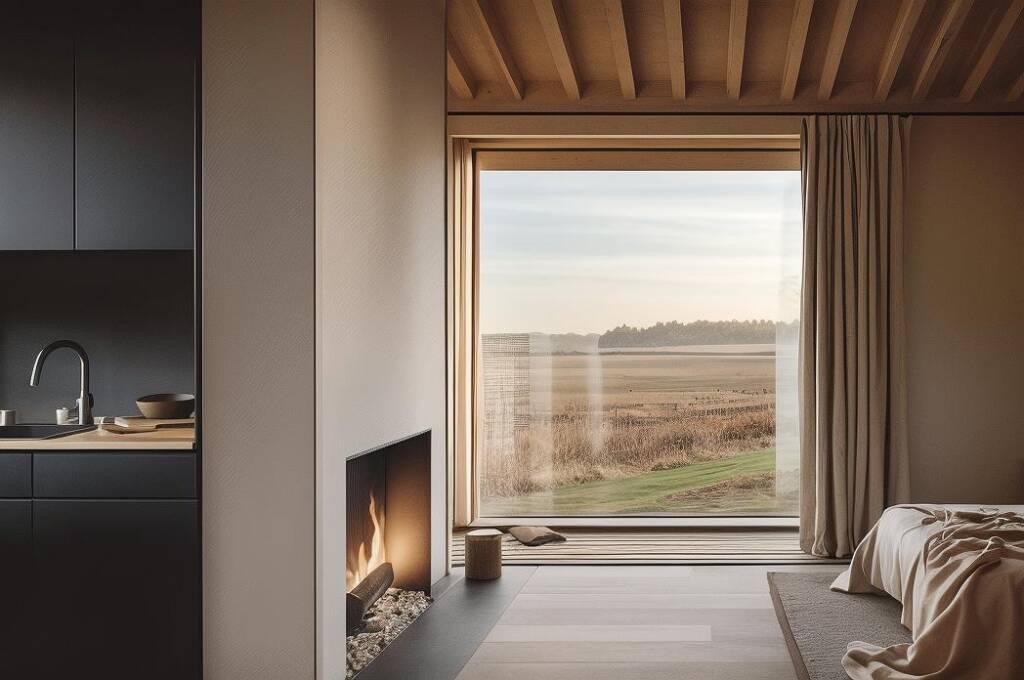
Our Shortlisted Competition Entry: Folklore Retreat | by ZAHRADA
Exceptions to the 30% Rule
The South Downs Technical Advice Note (TAN) clarifies this: an extension up to 35% may be acceptable if it clearly improves the design and achieves reasonable functionality.
Beyond 35%, you need “exceptional circumstances” to proceed. These are narrowly defined. High-quality design or the absence of landscape harm is often considered insufficient to override the 30% limit. Some of the recognised exceptions typically include:
- Provision of essential accommodation for a disabled person where the existing layout is unworkable.
- Situations where the original dwelling is so exceptionally small (e.g., under 50sqm that a 30% increase would fail to meet modern nationally described space standards. This will be permitted as the house remains in the “small/medium” category, so no housing stock is lost.
- Redevelopment schemes that involve the “rationalisation” of multiple unsightly outbuildings into a single, sensitively designed extension, resulting in an overall improvement to the site’s appearance.
If there are genuine “exceptional circumstances”, we’ve found the Planning Officers in the South Downs National Park Planning Authority to be helpful, particularly when we’ve approached them openly with evidence via a Pre-Application submission.
In January 2021, an appeal inspector allowed an appeal that exceeded the 30% rule on the basis that the property would remain a three-bedroom medium-sized home. The view was taken that the proposal would not reduce the supply of small and medium homes within the South Downs National Park.

How to Complement Your Existing Home and Get Planning Approval
You can comply with the 30% rule and still get rejected. The reason is often visual dominance and landscape impact. The technical note from the South Downs National Park states;
“All applications for replacement dwellings and extensions should be considered for their impact on local character and appearance. In some cases, proposals will not in any event respect local character, fail to complement the scale, height, massing, appearance and character of the existing dwelling, or have an overall adverse impact on the landscape of the National Park.”
Your extension must look like it belongs to the original building. In most cases, it should be clearly secondary, and not dominant.
A few design strategies that work well in the South Downs:
- Lower ridge than original: Your extension’s roof sits below the original building’s roofline, preserving the silhouette
- Set back from front elevation: The extension sits behind the front facade, hidden from the street
- Recessive materials: Match the original materials (same brick, slate, render) rather than contrasting sharply
- Glazed links: Use glass transitions between old and new, creating a visual break that reduces perceived massing
Design strategies that fail in most cases within the South Downs:
- Two-storey extensions on a single-storey cottage
- Bright new shiny materials on an old stone cottage
- Massive pitched roof on a modest cottage
- Double-height ceilings inside = looks cavernous from outside, even at 28% GIA
Volume Matters as much as Floor Area (GIA)
While Policy SD31 focuses on GIA, inspectors often refer to “volume” and “massing” when discussing over-development.
In major appeals like the Brighton Gasworks (APP/Y9507/W/23/3353409), the Secretary of State highlighted that concerns over height and density must be viewed in the context of the urban grain and landscape character.
In a residential setting, an extension that technically meets the 30% GIA limit but utilises double-height ceilings or massive roof forms may be refused for representing an “unacceptable increase in bulk” that harms the tranquility and scenic beauty of the National Park.
The Dark Skies Rule for Extensions in the South Downs National Park
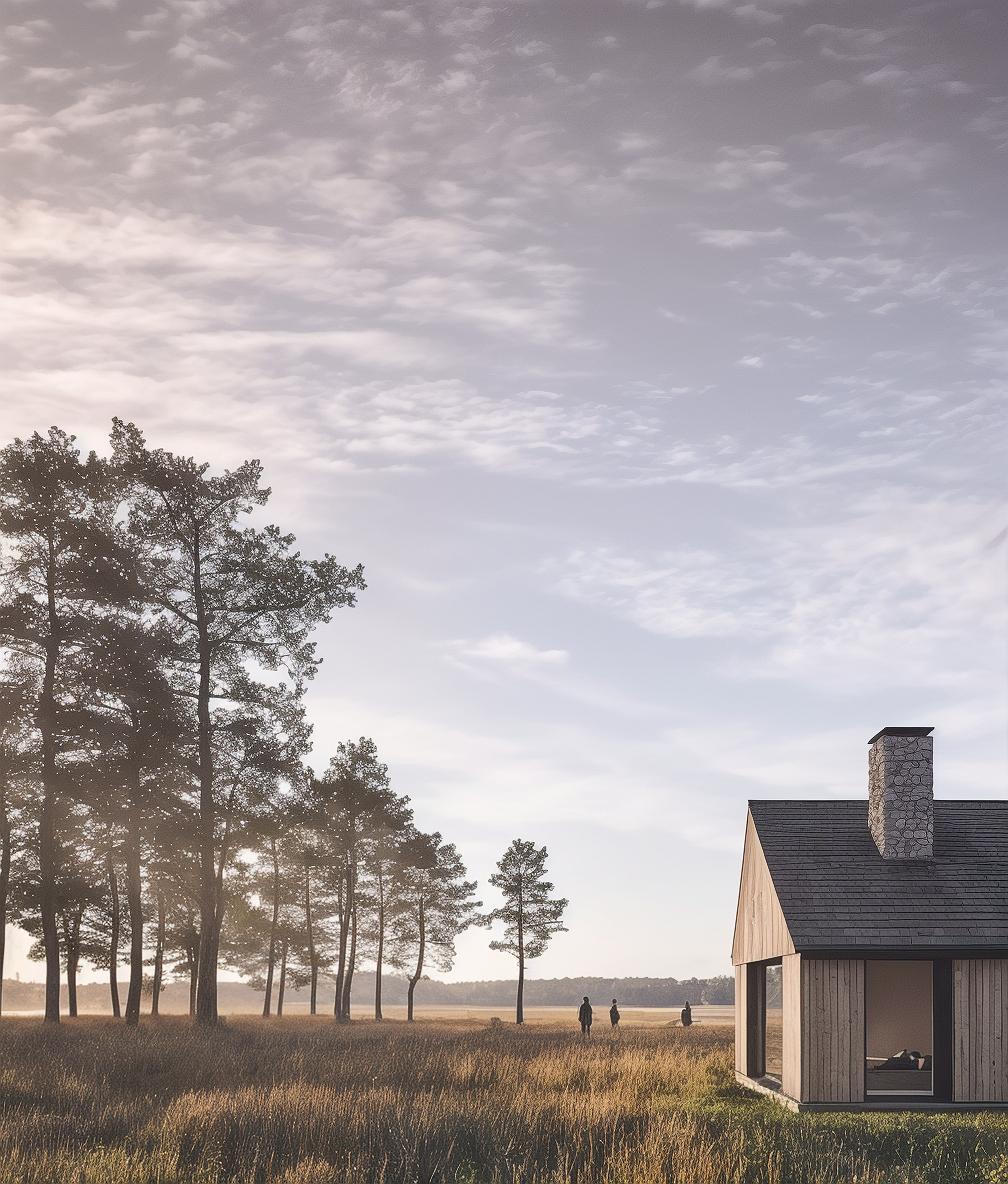
It’s worth being aware that Policy SD8 (Dark Night Skies) controls external lighting. Extensions with large windows, rooflights, or night lighting can be rejected if they create excessive light spill.
Planning officers now require a Lighting Assessment for extensions and applications that include;
- Includes Outdoor Lighting
- Development Outside Settlement Boundaries (Other than Householder)
- All applications in the vicinity of a Listed Building or within a Conservation Area.
- All applications at a location where bats and their roosts or other protected species are present
This list is not exhaustive, and the Local Planning Authority may request the submission of a lighting assessment during the course of your application.
Timeline, Costs & Realistic Expectations for Extensions in the South Downs
Planning Timeline:
- Pre-application advice: 4-6 weeks (if the application is potential contentious)
- Full planning application: 8-12 weeks standard determination
- Appeal (if refused): 6+ months additional
- Total realistic timeline: 4-6 months from start to approval
The South Downs NPA takes longer than most authorities because landscape impact is scrutinised heavily.
Professional Costs:
You can apply yourself, but extensions in South Downs have a high rejection rate for design/landscape reasons.
- Architect fees: £3,000–£8,000+ (depending on complexity)
- Planning consultant: £1,000–£2,000
- Landscape Architect: £1,500–£2,500
- Total professional costs: £5,500–£12,500
A “landscape-led” approach helps get approvals. This is a holistic approach to design we use on every project at ZAHRADA – whether it’s in a national park or not.
Extension Build Costs in the South Downs National Park in 2026
Based on Buildpartner: (standard specification, mid-range contractor):
These costs will differ depending on your expectation of finishes and the logistics for your site. We complete an outline cost plan as part of every feasibility study we prepare. If you need some help from a local Architect, reach out for a design consultation.
Home Renovations in The South Downs National Park
Policy SD31 remains the primary gatekeeper. Homeowners renovating their loved homes must view the “30% rule” not as a barrier, but as a technical framework within which to trade GIA and “rationalise” existing built forms.
As an Architect in Winchester, we love working in the South Downs. As a small studio of two, we provide an incredibly personal and intimate approach to all shared projects and clients:
- We start with the end in mind – How do you live in your home, and what do you want to change? What’s the catalyst?
- We consider both form and function – Every extension should be beautiful and make life easier
- We guide you through planning and building regulations from day one – No costly surprises or backtracking.
- We thrive on being approachable.
Whether we’re working on a cosy family home, or a larger project across the seas, our goal is always the same: to create designs that are authentic, meaningful and perfectly suited to the lives they will enhance.
Want to discuss your home extension project in the South Downs National Park?
About the Author
Email: design@zahrada.co.uk
Phone: +44 01962 453990
ZAHRADA is led by Tim Willment, an ARB-registered Architect. He is supported by his wife Zofia, an Architectural & BIID-registered Interior Designer.
We’ve built a design practice that is small, intimate and approachable. We have a particular fondness for breathing new life into old and forgotten spaces, giving them a “glow up” that respects their history while adding a fresh, modern twist.